Trusted By
12,000+ People

Noticed one side of your scrotum looks swollen but doesn’t hurt? That’s often the first sign of a hydrocele, a fluid-filled sac that builds up around the testicle. For anyone searching for hydrocele treatment in Ahmedabad, the first thing to know is this: most hydroceles are harmless, but a proper exam is the only way to be sure it isn’t something else. As an andrologist in Ahmedabad, we see this condition regularly in men of every age, and it’s rarely as alarming as it looks.
A hydrocele happens when clear fluid collects between the layers of tissue that surround your testicle. In newborns, this is common and usually clears up on its own within the first year. In adults, it typically shows up after an injury, an infection, or sometimes for no clear reason at all.
The swelling is usually painless, though larger hydroceles can create a heavy, dragging sensation, especially by the end of the day or after standing for long hours.
You might notice:
Here’s a simple way to tell it apart from other conditions: a hydrocele transilluminates, meaning light passes through it and glows because it’s filled with clear fluid. A solid lump or tumour won’t do that. This is one of the first tests we do during a physical exam, and it’s quick and painless.
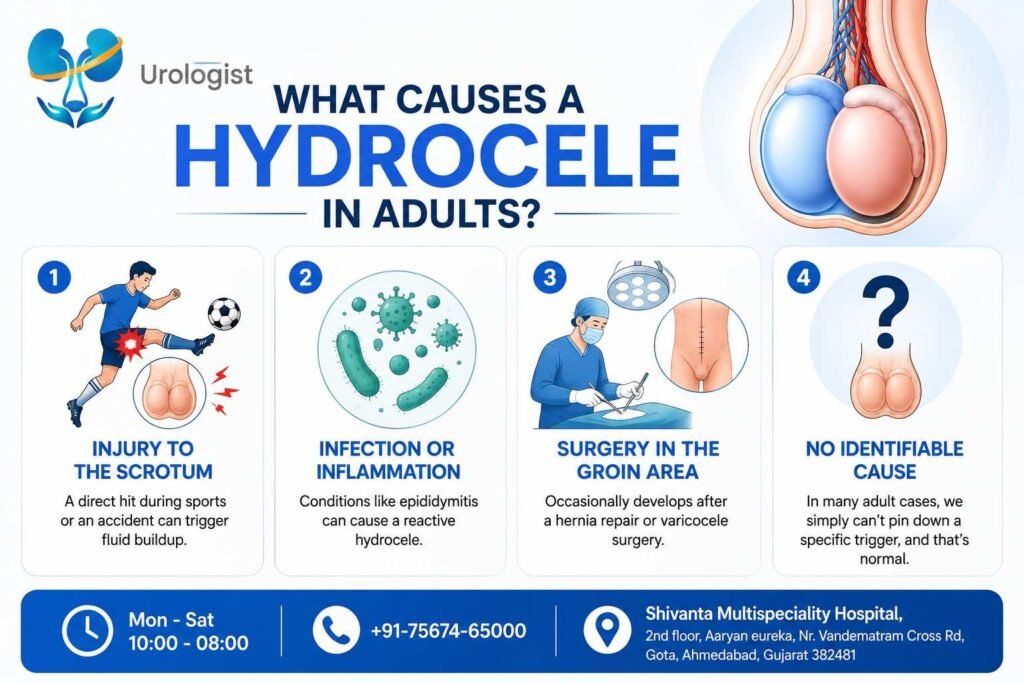
Unlike in infants, where hydroceles form due to an open passage between the abdomen and scrotum that hasn’t sealed yet, adult hydroceles usually develop for different reasons:
In rare cases, a hydrocele that appears suddenly in a man over 40 can be linked to an underlying testicular issue, which is exactly why we don’t recommend skipping the exam even if the swelling doesn’t bother you.
This is where a lot of men get confused, and understandably so, because not every hydrocele needs to be operated on.
If the hydrocele is small, isn’t growing, and isn’t causing discomfort, we often suggest monitoring it over a few months. Many small hydroceles, particularly in infants, resolve without any intervention.
If the swelling keeps growing, causes persistent heaviness, affects your daily activities, or if we can’t rule out another cause on ultrasound, hydrocelectomy is usually recommended. It’s a relatively short outpatient procedure, generally done in 30 to 45 minutes, with most patients going home the same day.
Fluid aspiration (draining it with a needle) is sometimes used for temporary relief, but here’s the honest part: aspirated hydroceles tend to come back, often within weeks, since the sac itself isn’t removed. Surgery addresses the actual cause rather than just the symptom.
If you’ve been dealing with related discomfort, it’s also worth reading our guide on testicular pain causes, since swelling and pain sometimes overlap and get confused for one another.
A small incision is made in the scrotum, the fluid-filled sac is drained, and the sac is then either removed or folded back on itself to prevent the fluid from collecting again. Most patients are up and walking the same day, though we usually advise avoiding heavy lifting or strenuous activity for about 1 to 2 weeks.
Mild swelling and bruising after surgery are normal and typically settle within 7 to 10 days. Wearing supportive underwear during recovery genuinely improves comfort. Complications like infection or fluid recurrence are uncommon, but we’ll walk you through exactly what to watch for before you leave the clinic.
For men also managing fertility concerns alongside a hydrocele, our page on andrology treatment covers how reproductive and scrotal health are often connected.
Dr. Dushyant Pawar has performed hydrocele repairs and other scrotal reconstructive procedures for patients across Gota and greater Ahmedabad and typically walks patients through the surgical and non-surgical options during the very first consultation rather than pushing straight to surgery. You can read more about his background on the Dr. Dushyant Pawar profile page.
Don’t wait if you notice:
Painless, slow-growing swelling can usually wait for a scheduled appointment, but it still deserves an exam rather than being ignored indefinitely.
Scrotal swelling is unsettling, but a hydrocele is one of the more manageable conditions we treat. The key is getting it properly examined rather than guessing, since the same swelling can sometimes point to something that does need prompt attention.
If you’ve noticed swelling that hasn’t gone away, reach out to us on WhatsApp for a quick question, or contact us to schedule an exam. As a trusted urology doctor in Ahmedabad, we’ll help you understand exactly what’s going on and what, if anything, needs to be done next.
Contact Us પર જઈને એપોઇન્ટમેન્ટ બુક કરો, અથવા સીધા +91-75674 65000 પર કૉલ/WhatsApp કરો.
If you’re experiencing urinary, kidney, prostate, or men’s health concerns, get expert guidance and explore the right treatment options today.
A: No. A hydrocele is fluid trapped in the scrotum, while a hernia involves tissue or intestine pushing through a weak spot in the abdominal wall. They can look similar, which is why an ultrasound is often used to tell them apart.
A: In infants, yes, most resolve on their own within the first year. In adults, small hydroceles can sometimes stay stable for years without needing treatment, but they rarely disappear completely on their own.
A: A simple hydrocele typically doesn’t affect sperm production. However, if it’s large or long-standing, it’s worth getting checked, since some underlying causes can indirectly affect fertility.
A: Most patients describe mild soreness for a few days after surgery, managed easily with prescribed pain medication. It’s not typically described as a painful recovery.
A: Most men return to desk-based work within 3 to 5 days and resume normal physical activity, including exercise, within 2 to 3 weeks.
Medical Review Disclaimer: The content on this page is designed to educate readers about hydrocele and available treatment options. It should not be used as a substitute for professional medical advice. Treatment decisions should always be made in consultation with a certified urologist after a thorough clinical examination and diagnosis.