Trusted By
12,000+ People

Your urologist has just told you that your kidney stone needs treatment. That’s the easier part. The harder part for most patients is what comes next: ESWL? RIRS? PCNL? Three procedures, three very different experiences, and very little plain-language explanation of which one is right for you.
The good news is that the decision isn’t arbitrary. Choosing the right kidney stone treatment largely comes down to your stone’s size, location, and density, and a kidney stone specialist in Ahmedabad will use your CT scan to match the procedure to your specific stone. Here’s what each option involves, so you walk into that consultation already informed.
All three approaches share the same goal: to remove the stone, protect your kidney, and get you back to normal life as quickly as possible. Where they differ is in how they reach the stone, how invasive the process is, and what recovery looks like.
Think of it as three tools in a toolkit, each built for a different job. Using the wrong one doesn’t just mean a harder recovery; it can mean a less complete result.
What it is: Extracorporeal Shock Wave Lithotripsy uses focused sound waves generated outside your body to break a kidney stone into fine fragments that you then pass naturally in your urine.
Best for: Stones up to 10–15 mm, located in the kidney or upper ureter, that are not too hard in composition (calcium oxalate dihydrate or uric acid stones respond better than calcium oxalate monohydrate).
What to expect: The procedure takes 45–60 minutes under sedation or mild anesthesia. You go home the same day. You’ll likely pass stone fragments in your urine over the next few weeks, sometimes with mild discomfort. A repeat session is occasionally needed if fragments don’t clear fully.
Honest limitation: ESWL doesn’t work well on very hard stones (like brushite or cystine), stones in the lower pole of the kidney, or anything larger than 15 mm. Success rates drop significantly outside these parameters, which is why your urologist checks stone density on CT before recommending it.
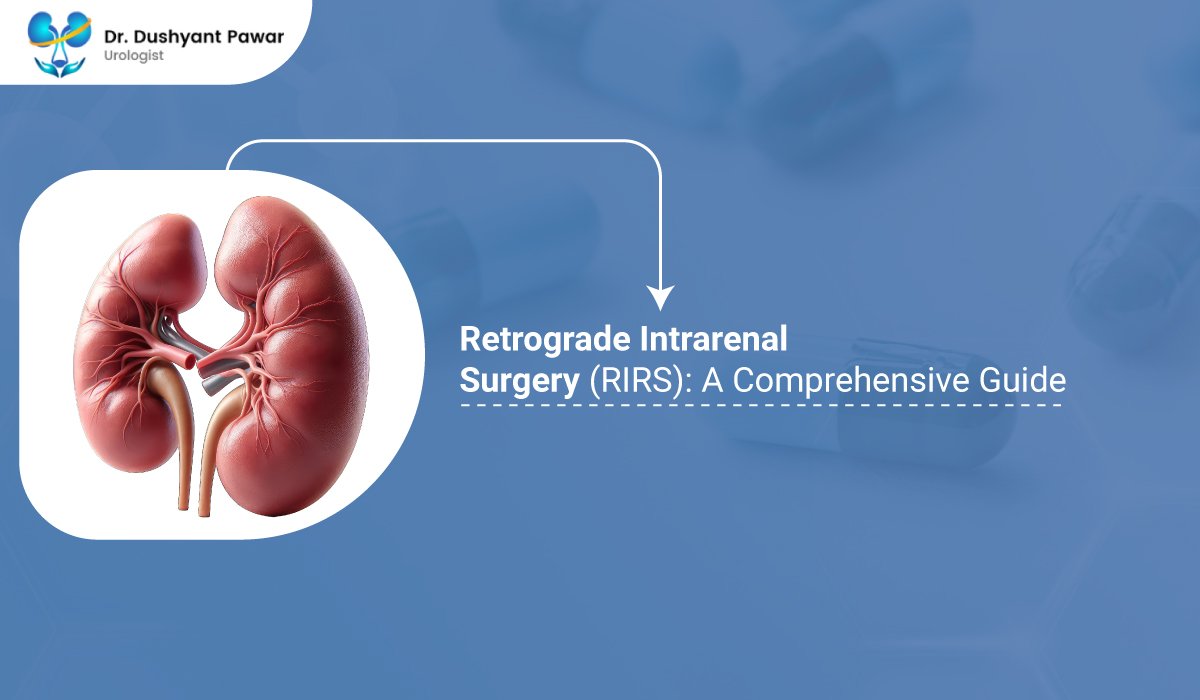
What it is: Retrograde Intrarenal Surgery uses a thin, flexible ureteroscope passed through the urethra and ureter directly into the kidney, with no cuts and no incisions. A laser (usually Holmium or Thulium) then breaks the stone into dust-fine fragments that either wash out or are retrieved.
Best for: Stones up to 15–20 mm, stones in the lower pole of the kidney where ESWL has poor clearance, stones that are too hard for shockwaves, and patients who can’t afford a long fragment-passage period (e.g., those with a single functioning kidney or frequent travelers).
What to expect: RIRS is done under general or spinal anesthesia and typically takes 60–90 minutes. Most patients go home within 24 hours. A small ureteric stent is usually placed for 1–2 weeks post-procedure to allow any residual fragments to pass comfortably. Stone-free rates with a skilled RIRS surgeon exceed 90% for appropriately selected stones.
The honest limitation: The procedure depends on the urologist’s experience with flexible scopes and laser settings. In experienced hands, RIRS is now the preferred option for stones in the 10–20 mm range. If you’re evaluating providers, ask specifically about their RIRS case volume.
Dr. Dushyant Pawar performs RIRS at Shivanta Multispecialty Hospital in Gota, Ahmedabad, and will review your CT scan to confirm whether your stone’s size, location, and density will make you a good candidate.
What it is: Percutaneous Nephrolithotomy involves making a small incision, typically less than 1 cm, through your back, directly into the kidney. A nephoscope is inserted through this track, and the stone is broken up and suctioned out.
Best for: Stones larger than 20 mm, staghorn calculi (stones that fill the kidney’s collecting system), stones that have failed ESWL or RIRS, or kidneys with structural abnormalities that make scope access difficult.
What to expect: PCNL is performed under general anesthesia and requires a 2–3-day hospital stay. A nephrostomy tube may remain in place for 24–48 hours post-procedure. Recovery at home typically takes 1–2 weeks. Despite the incision, PCNL is still considered minimally invasive compared to open surgery, and stone-free rates for large stones exceed 85% in a single session.
The honest limitation: PCNL has the highest stone-clearance rate for large stones, but it also carries the longest recovery of the three procedures. For patients with bleeding disorders or those on blood thinners, additional pre-procedure management is needed.
Treatment depends on the size, location, and type of kidney stone.
| Stone Size | Location | Recommended Procedure |
|---|---|---|
| < 10 mm | Kidney / Upper Ureter | ESWL or RIRS |
| 10–15 mm | Kidney (Favorable Position) | ESWL or RIRS |
| 10–20 mm | Lower Pole / Hard Stone | RIRS Preferred |
| > 20 mm | Any Location | PCNL |
| Staghorn Stone | Kidney | PCNL |
Stone size gets most of the attention, but stone density measured in Hounsfield Units (HU) on a CT scan matters just as much for ESWL candidacy. Stones above 900–1000 HU are considered hard and respond poorly to shockwaves, even if they’re small. Your urologist will check this before recommending ESWL, so if a clinic is offering ESWL without reviewing a recent CT, that’s worth questioning.
What you eat after treatment also plays a role in whether new stones form. Our guide on kidney disease and diet covers the foods most likely to increase recurrence risk, worth reading before your follow-up appointment.
If you’ve been diagnosed with a kidney stone and your doctor has mentioned ESWL, RIRS, or PCNL, you’re not at a crossroads with a clear map. Stone size and density narrow the options significantly, and a urologist who reviews your CT thoroughly will be able to explain exactly why one procedure fits better than another.
The best urologist in Ahmedabad for your case is the one who explains why a specific procedure is recommended for your stone, not just what the procedure involves. If you have a CT scan in hand and want a clear answer, contact us to book a consultation with Dr. Dushyant Pawar at Shivanta Multispecialty Hospital, Gota. You can also reach the clinic directly at +91-75674 65000.
If you’re experiencing urinary problems, kidney stones, prostate issues, UTIs, or any other urological condition, don’t ignore your symptoms. Get expert diagnosis and personalized treatment from Dr. Dushyant Pawar.
A: Your input matters, but the procedure must match your stone. If your stone is 25 mm and hard, choosing ESWL because it sounds easier will likely result in an incomplete treatment and a second procedure anyway. Your urologist will explain why they’re recommending a specific approach based on your CT findings.
A: In most cases, yes, but prior surgery can change the anatomy of your ureter and kidney, which your urologist needs to assess beforehand. A flexible ureteroscopy under a skilled surgeon is generally safe even after previous renal procedures.
A: ESWL: typically, 2–3 days. RIRS: 3–5 days for desk work, up to 1 week for physical jobs. PCNL: 1–2 weeks. These are general ranges; your urologist will give you a more precise estimate based on your case.
A: Kidney stones have a recurrence rate of roughly 50% within 10 years if dietary and hydration habits aren’t addressed. Your urologist may recommend a 24-hour urine test after the stone passes to identify your specific metabolic risk factors and tailor a prevention plan.
A: Most health insurance plans in India cover kidney stone procedures under the surgical benefits category, subject to policy terms. Check your policy for waiting periods and sub-limits on urology procedures. Your hospital’s billing team can help with pre-authorization.
A: Mini-PCNL uses a smaller access tract (about 14–20 Fr vs. 24–30 Fr for standard PCNL), which means less blood loss and a faster recovery while still achieving high stone-clearance rates for stones in the 15–25 mm range. It’s increasingly offered as an intermediate option between RIRS and full PCNL.
Disclaimer: This article is for informational purposes only and does not constitute medical advice. Always consult a qualified urologist for diagnosis and treatment decisions specific to your condition.