Trusted By
12,000+ People

If you’ve been treated for a urinary tract infection only to find yourself back at the doctor’s a few weeks later, you’re not alone. Recurrent UTIs are one of the most common and most frustrating problems women face. Many women in Ahmedabad and across Gujarat quietly suffer through repeated infections, assuming nothing can be done. But there is a real solution. As a specialist offering recurrent UTI treatment in Ahmedabad, I see this pattern every day and, in most cases, we can find the root cause and stop these infections for good. If you’ve been looking for the best female urologist in Ahmedabad, you’ve come to the right place. This guide will walk you through exactly why UTIs keep coming back and what you can do about them.
A single UTI is common. A recurring one is a medical pattern that needs investigation.
We define recurrent UTIs as three or more infections in a year, or two within six months. If you keep getting treated and keep coming back, that’s not bad luck; that’s a sign that something deeper needs attention.
Many women assume UTIs are just a part of life. They’re not. While one or two episodes can happen to anyone, repeated infections signal either a structural issue, a bacterial problem, or lifestyle and hormonal factors that can be addressed.
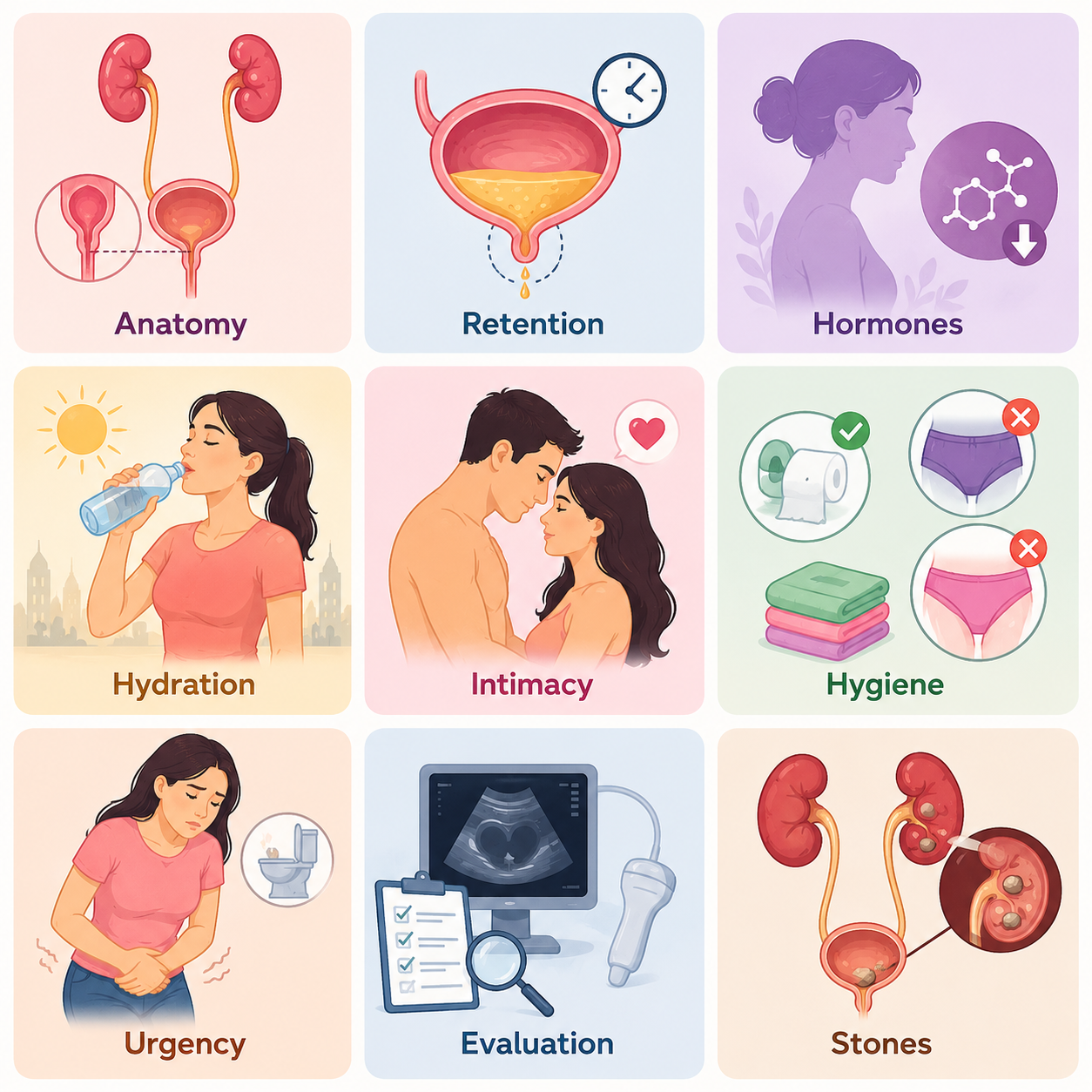
1. Anatomy
Women have a shorter urethra than men, which means bacteria from outside the body have a shorter distance to travel to reach the bladder. This is the most basic reason women are far more prone to UTIs than men.
But anatomy alone doesn’t explain why some women get infections repeatedly while others rarely do.
2. Incomplete Bladder Emptying
If your bladder doesn’t empty fully when you urinate, leftover urine becomes a breeding ground for bacteria. This can happen due to bladder weakness, pelvic floor tension, or certain anatomical variations.
Many women don’t realize their bladder isn’t emptying properly; it often shows up only on a bladder scan in the clinic.
3. Hormonal Changes
Estrogen plays a key protective role in the urinary tract. When estrogen levels drop during menopause, after childbirth, or with certain hormonal conditions, the lining of the bladder and urethra becomes thinner and more vulnerable to infection.
This is why many women notice UTIs becoming more frequent after their 40s.
4. Dehydration, especially in Ahmedabad’s Climate
This one is easy to overlook but very real. Ahmedabad’s summers are brutal, and many women simply don’t drink enough water throughout the day. Low fluid intake means concentrated urine that doesn’t flush bacteria out effectively.
During the monsoon season, waterborne bacterial exposure also increases, adding another seasonal spike in UTI cases.
5. Sexual Activity
Intercourse can introduce bacteria into the urethra. For some women, this is a consistent trigger almost every infection follows within a day or two of sexual activity. This is sometimes called “honeymoon cystitis” and is very treatable with the right approach.
6. Hygiene and Clothing Habits
Certain habits of wiping back to front, wearing tight synthetic underwear, or delaying urination for long periods can raise UTI risk significantly. Minor adjustments here can make a meaningful difference.
7. Underlying Structural or Kidney Problems
Less commonly, recurrent UTIs are linked to kidney stones, a narrowed urethra (urethral stricture), or bladder abnormalities. This is why patients with truly persistent infections need a proper urological evaluation, not just repeated rounds of antibiotics.
Each time you take antibiotics for a UTI, you’re not addressing the underlying cause; you’re only treating the current infection.
Over time, the bacteria causing your infections can become resistant to the antibiotics you’ve been using. This makes future infections harder to treat and means you may need stronger medications.
If you’ve been on three or more courses of antibiotics in a year, it’s time to see a urologist rather than your general physician. A urology specialist can evaluate the actual cause rather than just treating symptoms.
When a patient comes to me with a history of repeated infections, I don’t just prescribe another antibiotic. I investigate.
The evaluation typically includes:
This thorough approach means we find the real reason for your recurring infections and treat that, not just the symptoms.
Targeted Antibiotic Therapy
Once a culture confirms the specific bacteria and their sensitivity, we prescribe the right antibiotic, not a generic one. This makes treatment far more effective.
Post-Intercourse Prophylaxis
For women whose UTIs consistently follow sexual activity, a single low-dose antibiotic taken right after intercourse can be highly effective in breaking the pattern.
Low-Dose Preventive Antibiotics
In women with very frequent infections and no structural cause, a low-dose antibiotic taken daily for three to six months can significantly reduce the recurrence rate. This is a supervised medical decision, not something to do on your own.
Hormonal Treatment
For post-menopausal women, local estrogen therapy (a small vaginal application) can restore the protective lining of the urinary tract and dramatically reduce infection frequency. This is safe and well-established.
Treating Underlying Causes
If we find a kidney stone, urethral narrowing, or bladder emptying problem, treating that condition directly often resolves the UTI pattern entirely. For more on how kidney stones can affect your urinary health, read our guide on kidney stone treatment in Ahmedabad.
Lifestyle Guidance
We also work with patients on practical changes, adequate hydration (especially through Ahmedabad’s summer months), hygiene habits, voiding patterns, and dietary adjustments. Small, consistent changes here can dramatically reduce the frequency of infections.
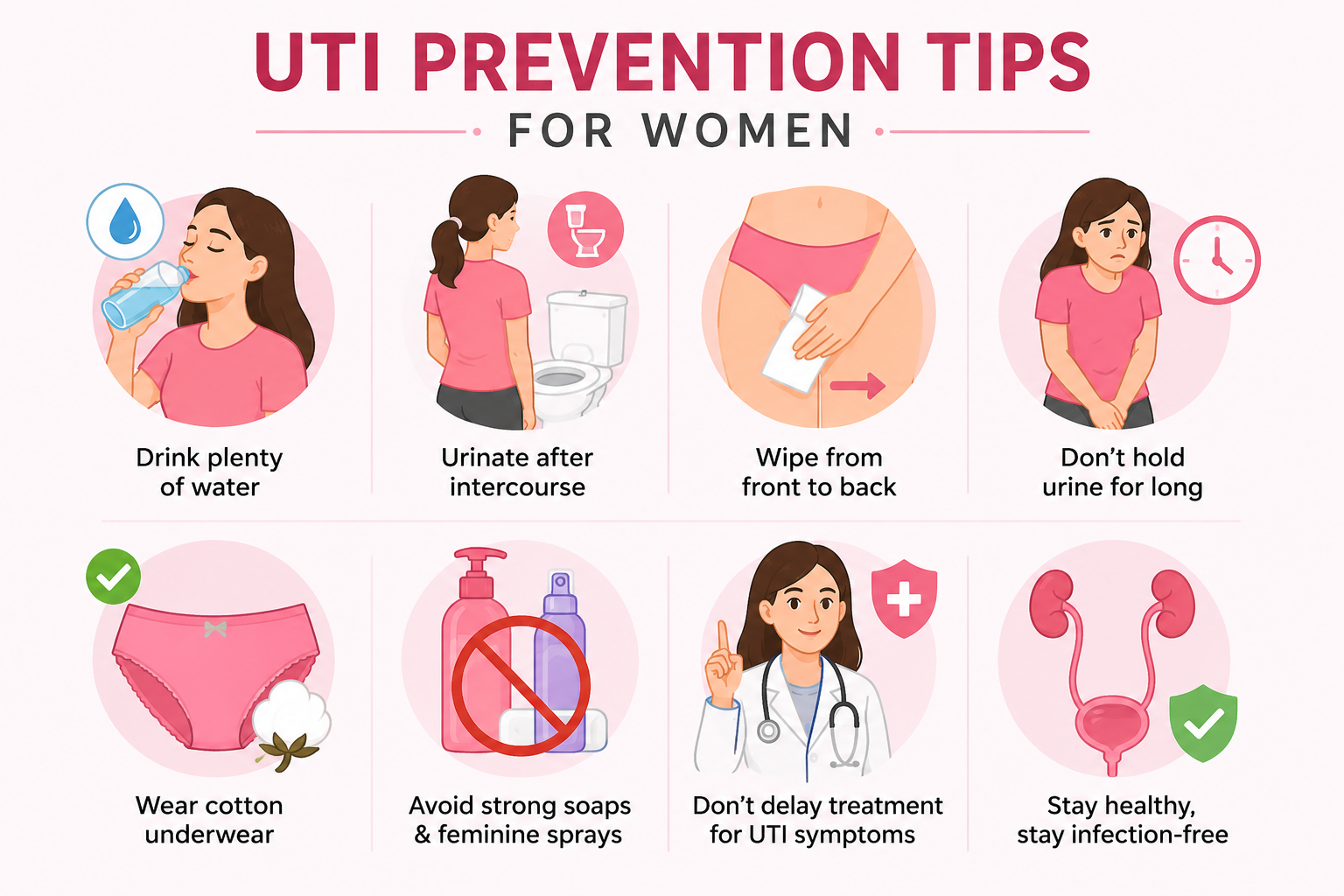
These habits won’t cure an existing infection, but they significantly reduce how often one starts.
Tired of dealing with UTIs that keep coming back? Don’t wait for the next infection. Chat with us on WhatsApp to book your consultation, and we’ll find the cause and create a plan to stop them.
Recurrent UTIs are exhausting physically and emotionally. But they are also very treatable once you know what’s driving them. Whether it’s a hormonal shift, a structural issue, or a bacterial pattern, there is a clear path forward.
Dr. Dushyant Pawar and the team at our clinic in Gota, Ahmedabad, have helped many women break this cycle, often permanently. If you’re ready to stop guessing and start getting answers, we’re here. You can also contact us to schedule your appointment at a time that works for you. As one of the trusted names for urology care, we’re committed to helping every patient, whether you’re searching for a urologist in Ahmedabad or specifically need female urology expertise.
Get expert urology care with Dr. Dushyant Pawar. Click here to book your consultation now.
A: No, monthly UTIs are not normal and should be evaluated by a urologist. Frequent recurrence suggests an underlying cause — structural, hormonal, or bacterial — that needs proper investigation and targeted treatment.
A: Very mild bladder infections may occasionally resolve with increased fluids, but most UTIs require antibiotics to clear completely. An untreated UTI can spread to the kidneys, causing a more serious infection called pyelonephritis.
A: This usually means the antibiotic didn’t match the specific bacteria causing your infection, or the root cause (like incomplete bladder emptying or a structural issue) was never addressed. A urine culture and urology evaluation will find the real answer.
A: If left unaddressed, recurrent UTIs can lead to kidney damage, antibiotic resistance, and chronic bladder problems. They also significantly impact quality of life. With proper treatment, most women can achieve long periods completely free of infection.
A: If you’ve had three or more UTIs in a year, if infections keep returning within weeks of treatment, or if you have blood in your urine or back pain with infections, it’s time to see a urologist. A specialist can investigate the cause rather than just repeating antibiotic courses.