Trusted By
12,000+ People

Stapler circumcision is a surgical procedure that removes the foreskin covering the head of the penis using a specialised circular stapling device. It is designed to make circumcision quicker and help achieve consistent cutting and wound closure. Doctors may recommend it for men with a tight foreskin, recurrent inflammation, or other medical problems involving the foreskin. However, it is not suitable for everyone, and the choice of technique depends on the patient’s condition and the urologist’s assessment.
Stapler circumcision is a modern technique used to remove the foreskin from the penis. Unlike conventional circumcision, which generally involves surgical cutting and stitches, this method uses a specialised device with a circular blade and small surgical staples.
The device removes the foreskin and brings the wound edges together. This can help control bleeding and provide a consistent wound closure. Depending on the device used, some staples may fall off naturally during healing, while others may require removal by the treating surgeon.
Circumcision may be recommended for medical reasons, particularly when the foreskin causes repeated discomfort, inflammation or difficulty with hygiene.
A urologist may recommend circumcision when a problem involving the foreskin does not improve with appropriate treatment or keeps returning.
Common reasons include:
Phimosis is a condition in which the foreskin cannot be pulled back easily over the head of the penis. In adults, this may cause pain during erections, difficulty cleaning the area, or discomfort during sexual activity.
When the tightness causes persistent symptoms, circumcision may be considered.
Balanitis refers to inflammation of the head of the penis. It may cause redness, itching, swelling, soreness, or discharge. Inflammation can occur due to infections, irritation, or certain skin conditions.
If balanitis keeps returning, a urologist may assess whether circumcision could help prevent further episodes.
Some men experience repeated inflammation or infections involving the foreskin. Proper hygiene and treatment of the underlying cause are important. Circumcision may be considered in selected cases when these problems continue.
You can also read about Urinary Tract Infections to understand urinary symptoms and the importance of appropriate diagnosis.
A tight or painful foreskin can make cleaning difficult. This may contribute to irritation and inflammation. Circumcision can make cleaning the head of the penis easier after healing.
However, good hygiene alone does not mean every man needs circumcision. The decision should be based on medical need, symptoms, and personal circumstances.
Scarring, repeated tearing or certain skin conditions affecting the foreskin may also require specialist evaluation. The appropriate treatment depends on the cause and severity of the problem.
Stapler circumcision is generally performed by a trained urologist in a suitable medical setting. The exact steps may vary depending on the device, the patient’s anatomy, and the surgeon’s approach.
Before the procedure, the urologist examines the penis and foreskin and asks about symptoms, medical history, medications and previous treatments.
The doctor may recommend tests if needed, particularly when there are concerns about bleeding, infection, diabetes or other health conditions.
The consultation is also an opportunity to discuss the expected results, possible complications, cost and alternative circumcision techniques.
The procedure is performed using suitable anaesthesia, commonly local anaesthesia in selected adults. Other anaesthesia options may be considered depending on the patient’s needs and the clinical setting.
Anaesthesia helps reduce pain during the operation.
The surgical area is cleaned, and the urologist prepares the foreskin for the procedure. The correct device size and positioning are important for safe and appropriate removal of the foreskin.
The specialised circular device is positioned according to the manufacturer’s instructions and the surgeon’s technique. Its cutting mechanism removes the planned portion of the foreskin while the stapling mechanism helps close the wound edges.
The surgeon checks the area to confirm that bleeding is controlled and that the wound closure is satisfactory.
After the procedure, the medical team checks for bleeding, pain, and other immediate concerns. The patient receives instructions about wound care, medication, activity restrictions, and follow-up appointments.
Many patients can return home the same day, but this depends on their condition and the treating team’s advice.
Stapler circumcision offers several potential advantages over conventional techniques. However, the benefits can vary, and no technique guarantees a complication-free procedure.
The stapling device combines cutting and wound closure into a coordinated process. This may reduce the time required for surgery compared with conventional circumcision.
A randomised clinical trial involving 879 adult men reported a shorter average operating time with circular stapler circumcision than with conventional surgery. These results are encouraging, but outcomes may vary across hospitals, devices and patient groups.
The device is designed to cut the foreskin and secure the wound edges in a controlled manner. This may help reduce blood loss during the procedure.
However, bleeding can still occur, and some patients may require additional treatment or stitches.
Some clinical studies have reported lower pain scores with stapler circumcision compared with conventional surgery. Individual experiences differ, and pain management remains an important part of recovery.
The device uses small staples to bring the wound edges together. This may help produce a consistent closure when the device is correctly selected and used by an experienced surgeon.
The final appearance still depends on individual healing, the amount of foreskin removed, and the surgical technique.
Once the wound has healed, removing the foreskin can make it easier to clean the head of the penis. This may be particularly helpful for men who previously had trouble cleaning the area because of phimosis.
Some patients may return to routine, non-strenuous activities relatively soon after surgery. However, the wound still needs time to heal, and sexual activity, strenuous exercise and other activities must be restricted as advised by the urologist.
Important: Stapler circumcision is not automatically better than every other circumcision technique. Your doctor can explain which method is most suitable for your specific condition.
Stapler circumcision is a surgical procedure, so it carries some risks. Knowing about them helps patients make an informed decision and recognise warning signs during recovery.
As with other surgical procedures, anaesthesia can carry risks. The type of anaesthesia and the patient’s overall health influence which precautions are needed.
Discuss these risks with your urologist before proceeding. The goal is to understand both the expected benefits and the limitations of the procedure.
Recovery is an important part of treatment. Although stapler circumcision may reduce operating time, it does not mean that the wound heals immediately.
Healing varies from person to person. Many adults need several weeks to fully recover, and some may take longer.
During the first few days, you may experience:
Follow the prescribed medication schedule and the wound-care instructions provided by your doctor.
Swelling and discomfort should gradually improve. Keep the area clean and dry as advised and avoid activities that put pressure or friction on the surgical wound.
Do not force the foreskin or manipulate the wound. If staples remain in place, allow the treating surgeon to advise you about their management.
Complete healing often takes around four to six weeks after adult circumcision, although the timeline varies by patient and technique. Your urologist will advise you when it is safe to resume normal activities.
Many people can return to desk-based work within about a week, depending on their comfort and the nature of their job. Physically demanding work may require more time off.
Avoid heavy lifting, cycling, strenuous exercise and sports until your doctor confirms that these activities are safe.
Avoid sexual intercourse and masturbation for at least four weeks, or longer if advised by your surgeon. The wound should be fully healed before sexual activity resumes.
Returning too early may cause bleeding, wound separation, or delayed healing.
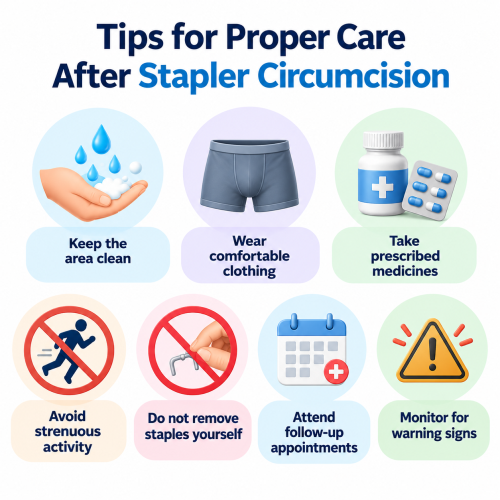
Good aftercare supports healing and reduces the risk of complications.
If you have difficulty passing urine after surgery, contact your medical team promptly. If you cannot pass urine at all or have heavy bleeding that does not stop, seek emergency medical care.
You can learn more about urologists in Ahmedabad and explore information on Stapler Circumcision and male health.
Both methods aim to remove the foreskin, but they use different approaches to cutting and wound closure.
| Feature | Stapler Circumcision | Conventional Circumcision |
| Technique | Uses a specialised circular cutting and stapling device | Uses surgical instruments to remove the foreskin |
| Wound closure | Usually uses small staples | Often uses surgical stitches or another method of wound closure |
| Operating time | May be shorter in suitable cases | May take longer, depending on technique |
| Bleeding | May reduce blood loss during surgery | Bleeding is controlled using standard surgical methods |
| Aftercare | May require monitoring or removal of residual staples | May require care of stitches and the surgical wound |
| Suitability | Depends on anatomy, the condition being treated and device availability | Can be adapted to a wider range of clinical situations |
Neither method is ideal for every patient. Your urologist will consider your condition, medical history, anatomy, preferences and the surgeon’s experience before recommending a technique.
Stapler circumcision can be a suitable option for selected patients when performed by a trained surgeon using an appropriate device. Clinical research suggests that it may offer advantages such as shorter operating time and reduced blood loss.
However, complications such as bleeding, infection, wound-healing problems, and retained staples can still occur. Evidence also varies by device and study, so results from one clinical trial should not be treated as a guarantee for every patient.
A consultation with an experienced urologist helps determine whether stapler circumcision or another treatment is appropriate for you.
Consider a urological assessment if you experience:
If you are also experiencing difficulty in urine, do not assume that circumcision will resolve the problem. Urinary symptoms can have several causes and may need a separate evaluation.
Seek urgent medical care for severe pain, heavy bleeding, fever with worsening wound symptoms, or an inability to pass urine. visit Urologist Ahmedabad to learn about available urological care and consultation options.
Stapler circumcision is a device-assisted surgical option for men who need removal of the foreskin for medical reasons. It may offer advantages such as shorter operating time, reduced blood loss, and consistent wound closure, but it still carries risks and requires proper aftercare.
The most appropriate treatment depends on your symptoms, anatomy, medical history, and the urologist’s recommendation. Discuss the available options with a qualified specialist before deciding.
If you’re experiencing urinary, kidney, prostate, or men’s health concerns, get expert guidance and explore the right treatment options today.
The medical information in the blog was cross-checked against established clinical and patient-education sources:
A randomised clinical trial comparing stapler and conventional circumcision, including operating time, blood loss and complications.
NHS guidance on circumcision recovery, aftercare and warning signs.
A Cochrane review assessing circumcision devices compared with standard surgical techniques, including limitations in the available evidence.
Medical disclaimer: This article is for general educational purposes and does not replace a medical consultation, diagnosis or personalised treatment advice. Please consult a qualified urologist for guidance about your individual condition.