Trusted By
12,000+ People

Testosterone is an important hormone in men. It helps maintain sex drive, muscle strength, bone health, sperm production, and energy levels. When the body does not make enough testosterone, a man may notice changes in his physical health, mood, and sexual health.
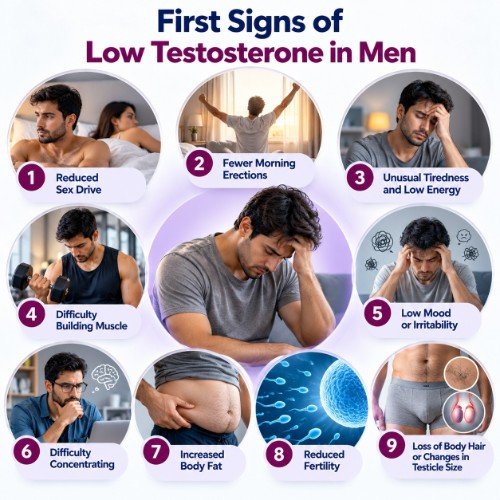
The first signs of low testosterone in men are often a lower sex drive, fewer morning erections, and unusual tiredness. Some men may also notice a loss of muscle strength, low mood, or difficulty concentrating. However, these symptoms can have other causes, so they should not be ignored or used to diagnose the condition on their own.
If you are concerned about your hormone levels, consulting a qualified urologist in Ahmedabad can help you understand your symptoms and decide whether testing is needed.
Low testosterone is a condition in which the body does not produce enough of this hormone. It is also called testosterone deficiency or male hypogonadism.
Testosterone is mainly produced in the testicles. It plays an important role in male development and health throughout life.
It helps with:
Testosterone levels can change with age, illness, and other health conditions. A low level does not always mean that a man has a medical problem. Doctors consider both symptoms and blood test results before making a diagnosis.
The symptoms of low testosterone can develop slowly. Some men notice changes in their sexual health first, while others experience changes in energy, mood, or physical strength.
A lower sex drive, also called low libido, is one of the more common signs of low testosterone.
You may notice that you think about sex less often or have less interest in sexual activity than before. This change may affect your personal life and relationships.
However, stress, anxiety, depression, relationship problems, and certain medicines can also reduce sexual desire.
If the change continues or affects your quality of life, speak to a doctor instead of assuming that testosterone is the cause.
Morning erections are common in healthy men. They often happen during sleep and may be present when you wake up.
If you notice that morning erections have become less frequent, it may be worth discussing this change with a doctor.
Low testosterone can play a role, but sleep problems, stress, diabetes, and other health conditions may also affect erections.
A change in morning erections alone cannot confirm low testosterone.
Do you feel tired even after getting enough sleep? Are your usual daily activities becoming harder than before?
Low testosterone may contribute to low energy in some men. You may feel less active or find it difficult to maintain your usual routine.
However, tiredness is a common symptom of many conditions, including anaemia, thyroid problems, poor sleep, and diabetes.
If fatigue continues without a clear reason, a medical check-up can help identify the cause.
Testosterone helps maintain muscle mass and strength.
When testosterone levels are low, some men may notice a gradual loss of muscle or find it harder to build muscle despite regular exercise.
You may also feel weaker during physical activities that were previously easy.
Ageing, poor nutrition, inactivity, and other medical conditions can cause similar changes. A doctor can help determine whether hormone testing is appropriate.
Testosterone may affect mood and emotional well-being.
Some men with low testosterone report feeling sad, irritable, less motivated, or less interested in activities they usually enjoy.
These symptoms are not specific to testosterone deficiency. Depression, anxiety, ongoing stress, and sleep problems can also affect mood.
If these changes persist, seek medical advice rather than starting hormone supplements on your own.
Some men with low testosterone report problems with focus, memory, or mental clarity.
You may find it harder to concentrate at work, remember small details, or complete tasks that normally feel easy.
Poor sleep, stress, anxiety, and other health conditions can also cause these problems. A doctor can assess your symptoms and decide whether testosterone testing or other investigations may help.
Low testosterone may contribute to changes in body composition.
Some men notice an increase in body fat, especially around the abdomen, along with a reduction in muscle mass.
However, weight gain does not automatically mean that testosterone levels are low. Diet, physical activity, sleep, age, and other health conditions also affect body weight.
If you notice unexplained changes in weight or muscle strength, discuss them during your medical consultation.
Testosterone plays a role in male reproductive health, but fertility depends on several factors.
Low testosterone may be linked to reduced sperm production in some men. This can make it harder to conceive.
Importantly, sperm production and testosterone levels are not the same thing. A man can have a normal testosterone level and still have a fertility problem.
If you are planning a family and have concerns about fertility, a doctor may recommend hormone tests and a semen analysis.
In more significant cases of testosterone deficiency, men may notice reduced facial or body hair growth. Some may also notice a change in testicle size.
These signs do not occur in every man with low testosterone. They can also be linked to other medical conditions.
A new change in testicle size, a lump, or swelling should be examined by a doctor, especially if it is sudden or painful.
Several factors can affect testosterone production.
Common causes and risk factors include:
In some cases, more than one factor may be involved. Finding the underlying cause is an important part of treatment.
Symptoms alone cannot confirm low testosterone. A blood test is needed to check hormone levels.
The doctor will ask about your symptoms, sleep, general health, medicines, sexual health, and fertility plans.
A physical examination may also be needed to check for signs that help explain the symptoms.
Testosterone levels are usually highest in the morning. Therefore, doctors commonly recommend a morning blood test.
A low result may need to be repeated on another morning to confirm the finding. Recent illness and other factors can temporarily affect the result.
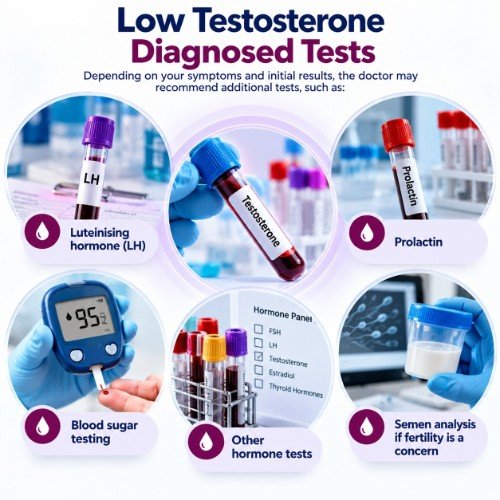
Depending on your symptoms and initial results, the doctor may recommend additional tests, such as:
The tests depend on your symptoms and medical history. Not every man needs every test. You can learn more about sexual dysfunction in men, its causes, and treatment options.
Yes. Treatment depends on the cause, the severity of symptoms, test results, and whether you want to have children.
Doctors may recommend lifestyle changes, treatment of an underlying condition, or specific medical treatment.
Healthy habits that may support normal hormone function include:
Some men with confirmed testosterone deficiency may need testosterone therapy. However, this treatment is not suitable for everyone.
Important: Testosterone treatment can reduce sperm production and may affect fertility. Men who want to have children should discuss this before starting treatment. Do not use testosterone injections, gels, or supplements without medical advice.
For a broader understanding of available care, see this guide to low testosterone treatment in Ahmedabad.
You should consider a medical consultation if you notice:
Do not wait for every symptom to appear. Some men experience only a few signs.
Sexual health concerns can have several causes. For example, persistent erection problems may need a different evaluation from reduced sexual desire. Understanding the difference between these conditions helps the doctor choose the right tests and treatment.
If you are looking for specialist care, you can learn about the top urologists in Ahmedabad and discuss your symptoms with a qualified doctor.
The first signs of low testosterone in men may include reduced sex drive, fewer morning erections, fatigue, low mood, and loss of muscle strength. These symptoms can develop slowly and may be mistaken for stress or normal ageing.
However, symptoms alone cannot confirm testosterone deficiency. Proper medical assessment and blood tests are important to identify the cause and decide whether treatment is needed.
If you have ongoing concerns about your sexual health, energy levels, or fertility, seek advice rather than self-medicating. You can contact the clinic on WhatsApp to enquire about an appointment with Dr. Dushyant Pawar.
If you’re experiencing urinary, kidney, prostate, or men’s health concerns, get expert guidance and explore the right treatment options today.
A reduced sex drive is one of the more common signs. Fewer morning erections, fatigue, and low mood may also occur.
Can low testosterone occur in younger men?
Yes. Low testosterone can affect younger men as well as older men. Testicular conditions, certain medicines, obesity, and other health problems may contribute.
How can I check if my testosterone is low?
A doctor can assess your symptoms and recommend a morning blood test. A low result may need to be confirmed with another test.
Does low testosterone cause erectile dysfunction?
It can contribute to erection problems, but erectile dysfunction has many possible causes, including diabetes, poor blood flow, stress, and certain medicines.
Can I increase testosterone naturally?
Healthy weight management, regular exercise, good sleep, and treatment of underlying health problems may help support normal hormone levels. The right approach depends on the cause.
Medical note: This article is for general awareness and does not replace a medical consultation. Diagnosis and treatment should be based on an individual assessment by a qualified healthcare professional.